Sage X3 ERP: What It Is, Who It Fits, What It Costs
July 23, 2026 · 8 min read
Sage X3 ERP is the most capable system in the Sage family, built for larger and more complex organizations than the mid-market Sage products can serve. If you make or move physical goods across multiple sites or countries and you have outgrown Sage 100 or 300, X3 is the Sage product aimed squarely at you. Here is the straight version of what it is, who it fits, what it costs, and where it falls short.
One naming note first, because Sage loves a rebrand. Sage X3 has also been sold as Sage Enterprise Management and as Sage Business Cloud X3. Same core product, different labels across the years, so do not let the names confuse you into thinking they are separate systems.
What Sage X3 actually is
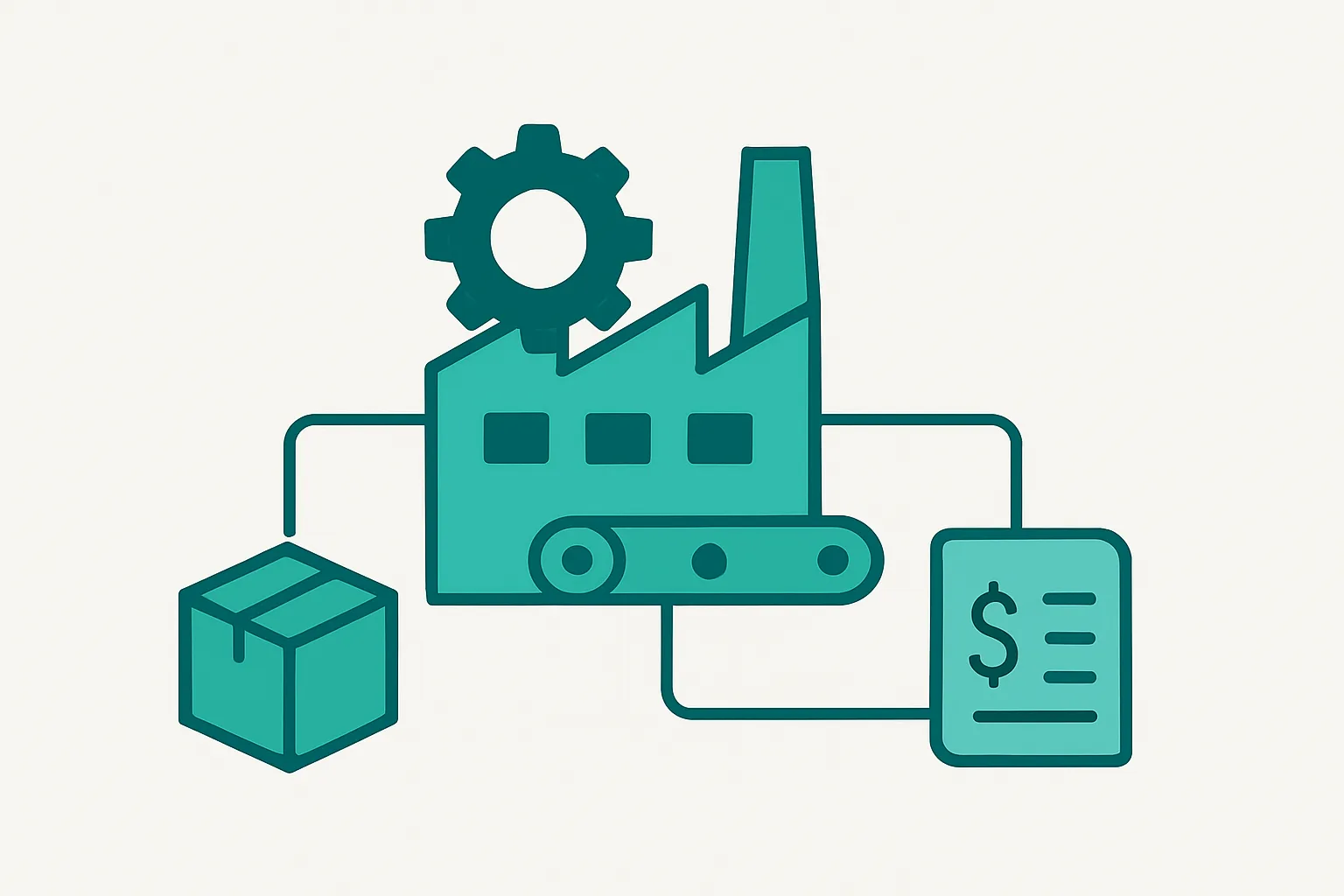
Sage X3 is a full ERP that ties finance, supply chain, manufacturing, and inventory into one system. That is the difference between it and the smaller Sage products: where Sage 100 and 300 are mid-market ERPs, X3 reaches into enterprise territory with deeper manufacturing and distribution capability and genuine multi-company, multi-currency, and multi-language support.
It runs either cloud-hosted or on-premise, which still matters to manufacturers with specific control, data-residency, or latency requirements. Like the rest of the Sage lineup above the entry level, it is sold and implemented through partners rather than bought off a website. You can see the full breakdown on our Sage X3 profile.
What Sage X3 does well
X3's strength is running an entire product business in one place. Manufacturing gets real depth: bills of materials, production planning, and shop-floor tracking. Distribution gets multi-warehouse inventory, purchasing, and order management. And finance sits underneath all of it, so a production run or a shipment updates the ledger without a separate system in the middle.
The multi-everything support is the other headline. If you operate across several legal entities, currencies, or languages, X3 handles that natively rather than through bolt-ons, which is why it shows up on shortlists for international manufacturers and distributors.

Who Sage X3 is for
X3 fits mid-to-large manufacturers, distributors, and multi-site companies whose complexity lives in operations, not just the books. Think a food and beverage producer with several plants, a chemicals maker with batch and compliance needs, or a distributor running inventory across multiple warehouses and countries.
It is genuine overkill for a small business that mostly needs clean accounting, and if that is you, the smaller Sage products or a lighter cloud ERP will cost far less pain. If you are still sorting out which Sage is which, our guide to whether Sage is an ERP untangles the whole product line.
What Sage X3 costs
Sage does not publish X3 pricing, because it is quote-based through partners and shaped by users, modules, and whether you deploy in the cloud or on-premise. Reported figures land in the five-to-six-figures-per-year range for the software, with larger deployments at the upper end. Treat any number you see, including that one, as a reported range rather than a quote.
The bigger point is the one that applies to every ERP: the license is only part of the spend. Implementation typically costs one to two times the first-year license, so budget on three-year total cost of ownership rather than the sticker. Our ERP implementation cost guide breaks down where the rest of the money goes.
The honest limits
Two things are worth going in clear-eyed about. First, X3 leans heavily on its partners. Implementation quality and even pricing vary widely depending on who you hire, so the partner decision shapes your outcome as much as the software does. Second, its ecosystem is smaller than the big cloud suites: there is no large self-serve app marketplace, so common integrations often need partner or custom development rather than a pre-built connector.
None of that disqualifies X3. It just means the diligence is different. You are betting on a capable system delivered by a specific partner, so vet the partner as hard as the product, and confirm your must-have integrations exist before you sign rather than after.
Sage X3 vs the alternatives
The honest comparison depends on where your complexity sits. Against the smaller Sage products, X3 wins when you need real manufacturing depth or multi-country operations and loses on cost and simplicity when you do not. Against the broader market, NetSuite and Acumatica are the systems X3 most often competes with for mid-to-large product businesses, and they bring larger ecosystems and cloud-native architectures to the table.
If your complexity is actually finance-first rather than operations-heavy, a different answer applies, and Sage Intacct or a comparison like Sage Intacct vs NetSuite is the more useful read. Match the system to your real bottleneck, not to the brand you already recognize.
The bottom line
Sage X3 ERP is a capable enterprise-leaning system for manufacturers and distributors who have outgrown the smaller Sage products and need multi-site, multi-country operations in one place. Its strengths are operational depth and international support; its watch-outs are partner dependence and a thinner integration ecosystem.
If that matches your business, put X3 on the shortlist, but price it honestly on three-year total cost of ownership and compare it against the cloud suites it competes with. Browse the full ERP directory to line it up against the alternatives at your size before you commit.
Frequently asked questions
What is Sage X3 ERP?
Sage X3 is the most capable ERP in the Sage family, tying finance, supply chain, manufacturing, and inventory into one system for larger and more complex organizations. It has also been sold as Sage Enterprise Management and Sage Business Cloud X3, which are the same core product under different names.
How much does Sage X3 cost?
Pricing is quote-based through partners and depends on users, modules, and deployment. Reported figures land in the five-to-six-figures-per-year range for the software, with larger deployments higher. Add implementation at roughly one to two times the first-year license, and compare on three-year total cost of ownership. These are reported ranges, not quotes.
Is Sage X3 cloud or on-premise?
Both. Sage X3 can be deployed cloud-hosted or on-premise, which still matters to manufacturers with specific control, data-residency, or latency requirements. The cloud option is partner-hosted rather than a single multi-tenant SaaS, which affects how updates and integrations are managed.
What is the difference between Sage X3 and Sage 300?
Sage 300 is a mid-market ERP for multi-company, multi-currency operations, while Sage X3 reaches into enterprise territory with deeper manufacturing and distribution capability and stronger multi-site, multi-language support. X3 is the step up when Sage 300 runs out of operational depth, and it costs more to match.
Is Sage X3 good for manufacturing?
Yes, manufacturing is one of its core strengths. It handles bills of materials, production planning, and shop-floor tracking, and connects them to inventory and finance in one system. It is a common shortlist candidate for food and beverage, chemicals, and other batch or process manufacturers.
Sage X3 vs NetSuite: which is better?
Neither is universally better; they fit different situations. Sage X3 offers flexible cloud or on-premise deployment and strong manufacturing depth, while NetSuite brings a larger integration ecosystem and a fully cloud-native suite. X3 also leans more on partners, so the partner you choose matters more to the outcome.
Keep going
Five questions. Three systems. No email required.
Take the 2-minute quiz