ERP vs Accounting Software: What's the Difference?
July 24, 2026 · 8 min read
The difference in ERP vs accounting software comes down to one word: scope. Accounting software records your money, invoices, bills, the general ledger, and reports. An ERP does all of that and connects the rest of the business to it, so inventory, purchasing, orders, and operations share one system with the books. That is the whole distinction, and everything else follows from it.
The confusing part is that the two overlap at the edges, and some products blur the line on purpose. So the useful question is not which is better, it is which one your business actually needs right now. Here is how to tell.
What accounting software does
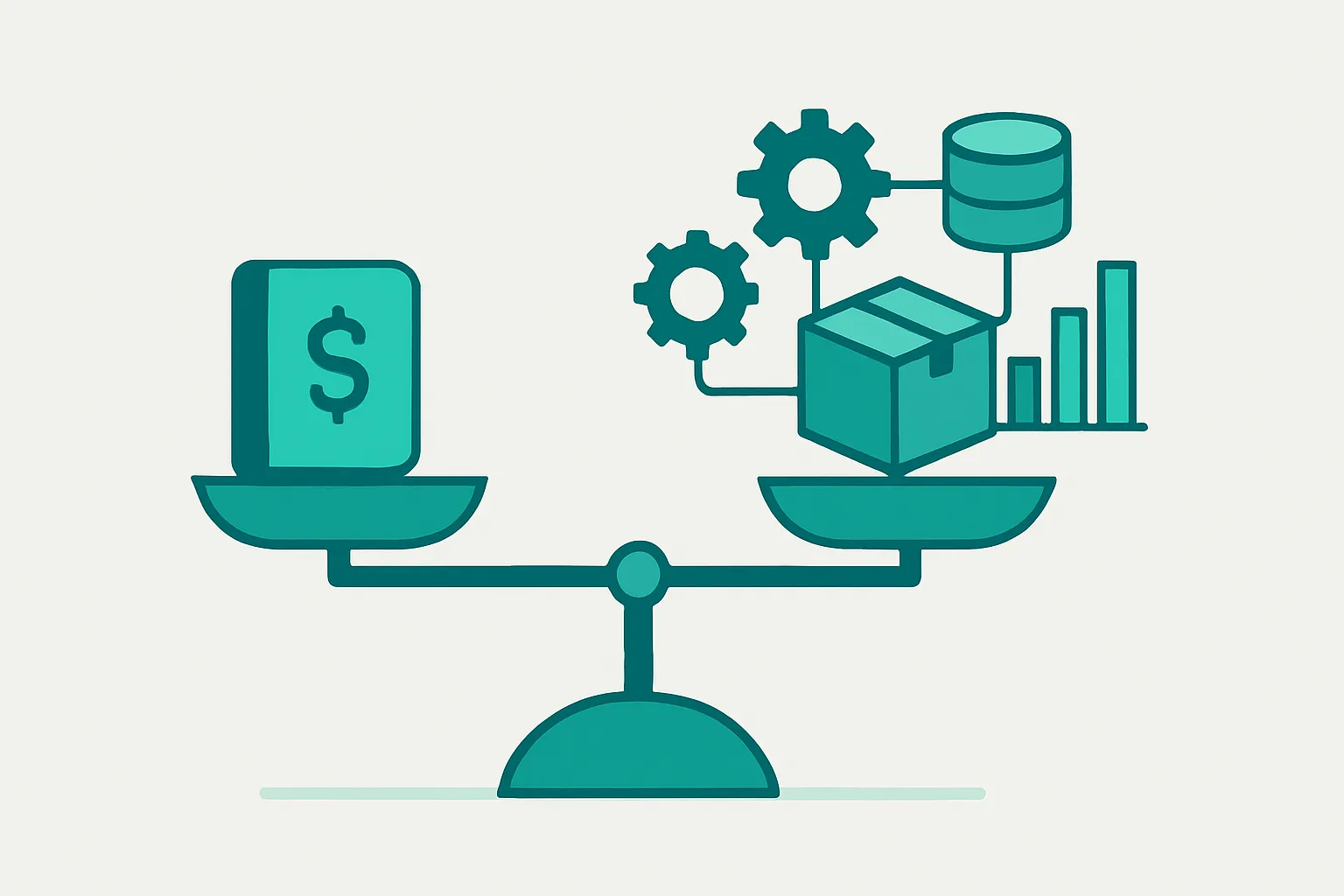
Accounting software runs the books. Invoicing, bills, banking, payroll in some cases, and financial reports. Tools like QuickBooks and Xero do this well, they are affordable, and most bookkeepers already know them. For a business whose complexity lives mostly in its finances, that is genuinely all you need.
The ceiling shows up when the rest of the business grows past what the books can see. Accounting software does not run a warehouse, coordinate a production line, or keep order management in sync with inventory. It records the financial result of those things after the fact, usually with a spreadsheet or a manual re-entry in between.
What an ERP does differently
An ERP connects operations to finance on one data model. When a sale happens, stock goes down, revenue is recognized, and the reporting updates together, without anyone re-keying the numbers between systems. That single shared source of truth is the real product, and it is what accounting software cannot offer no matter how many add-ons you bolt on.
That scope is also why an ERP costs more and takes longer to implement. You are not swapping one tool for another; you are connecting the whole business. Our ERP implementation cost guide covers what that actually runs, because the price gap is real and worth going in clear about.
Signs you've outgrown accounting software
You rarely need a formal analysis to know. The symptoms are physical and annoying, and they show up well before anyone says the word ERP. Watch for these:
- —You re-enter the same data between your accounting tool and other systems (inventory, a CRM, an e-commerce store)
- —Spreadsheets have quietly become critical infrastructure that only one person understands
- —You cannot answer basic questions (real-time inventory, true margin by product) without stitching reports together
- —Multiple entities or currencies turn every close into a manual project
- —Errors and double entry are creeping in because disconnected apps do not agree
But you might not need a full ERP yet
Here is the honest counterweight, because plenty of businesses jump too early and pay for complexity they never use. If your operations are simple and your pain is genuinely just accounting, a good accounting package plus one or two focused integrations often beats a full ERP on both cost and sanity.
The trigger is not revenue or headcount on their own. It is disconnected systems causing real errors, double entry, and blind spots. Until you feel that, accounting software is doing its job, and calling in an ERP would only cost you money and months you did not need to spend.
Where the line blurs
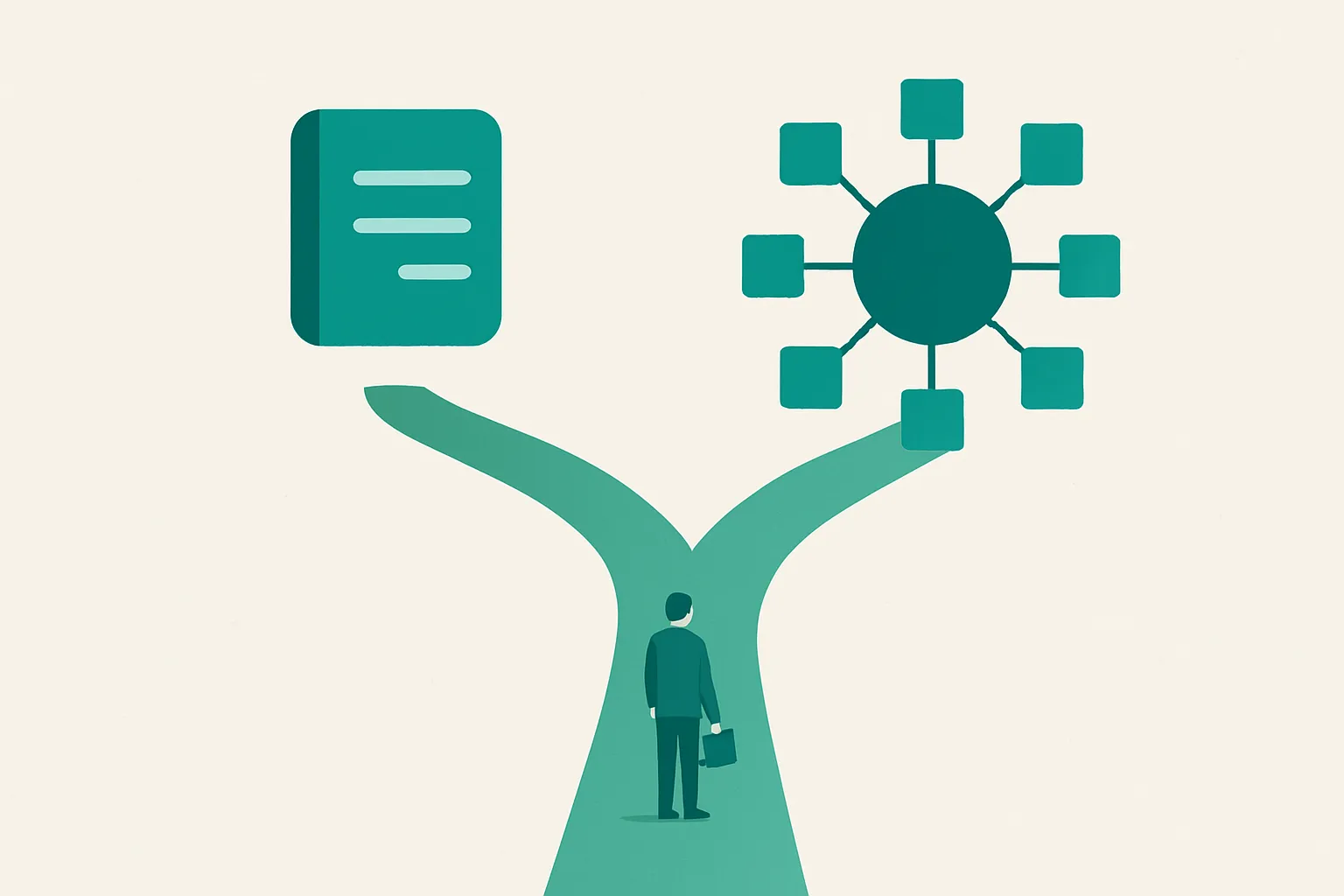
Some products sit deliberately in the middle, which is where most of the confusion comes from. QuickBooks is accounting software, though its class and location tags let people simulate a little ERP-like tracking before they hit its limits. On the other side, a finance-first ERP like Sage Intacct is a real ERP but leads with accounting depth, so it can feel like a very powerful accounting tool to a finance team.
Sage itself is a good illustration of the blur, since the brand spans both categories, which is exactly why we wrote a whole guide on whether Sage is an ERP. The label on the box matters less than the scope test: does it run more than the books?
How to choose
Start from your bottleneck, not the brand. If your pain is purely financial, keep it simple with accounting software and integrate what you need. If disconnected systems are causing real operational errors and blind spots, an ERP earns its cost by making them one system. And if your complexity is finance-heavy but you have multiple entities or need serious reporting, a finance-first ERP like Sage Intacct or NetSuite is the middle path built for exactly that.
Whatever you pick, price it on three-year total cost of ownership and match the system to your processes rather than reshaping the business around the software. Browse the full ERP directory to see which systems fit your size before you commit.
The bottom line
ERP vs accounting software is a question of scope, not quality. Accounting software runs the books brilliantly and stops there; an ERP connects the whole business to those books. Neither is better in the abstract; the right one is whichever matches how much of your business needs to share a single source of truth.
Figure out whether your real pain is financial or operational, and let that decide. If you are leaning toward an ERP, our finance-first comparisons and the full directory will help you shortlist the systems built for your situation.
Frequently asked questions
What is the difference between ERP and accounting software?
Scope. Accounting software records your money: invoices, bills, the general ledger, and reports. An ERP does that and connects operations like inventory, purchasing, and orders to finance on one shared data model, so the whole business runs from a single source of truth.
Is QuickBooks an ERP?
No. QuickBooks is accounting software. Its class and location tags let you simulate some ERP-like tracking, but it does not connect operations across a business the way an ERP does. Many companies start on QuickBooks and move to an ERP once disconnected systems start causing errors.
When do I need an ERP instead of accounting software?
When disconnected systems start causing real errors, double entry, and blind spots: you re-enter data between tools, spreadsheets have become critical infrastructure, or you cannot answer basic operational questions without stitching reports together. The trigger is that pain, not revenue or headcount on their own.
Can an ERP replace accounting software?
Yes. A full ERP includes accounting as one of its modules, so it replaces standalone accounting software rather than sitting alongside it. The difference is that an ERP also runs inventory, orders, and other operations from the same system, which standalone accounting software cannot.
Is Sage an ERP or accounting software?
Both, depending on the product. Sage 50 is accounting software, while Sage 100, 200, 300, X3, and Intacct are ERP systems at different sizes. Because the brand spans both categories, it is a common source of confusion, which we cover in detail in our guide to whether Sage is an ERP.
Is an ERP more expensive than accounting software?
Yes, usually by a wide margin. Accounting software is often a low monthly per-user fee, while an ERP adds implementation, data migration, and integration costs that typically run one to two times the first-year license. Compare on three-year total cost of ownership, and only take on that cost when the operational payoff justifies it.
Keep going
Five questions. Three systems. No email required.
Take the 2-minute quiz